
Dome geometry
A dome is one of the strongest shapes in construction: loads spread evenly across the curve, so the structure works with the material instead of against it.
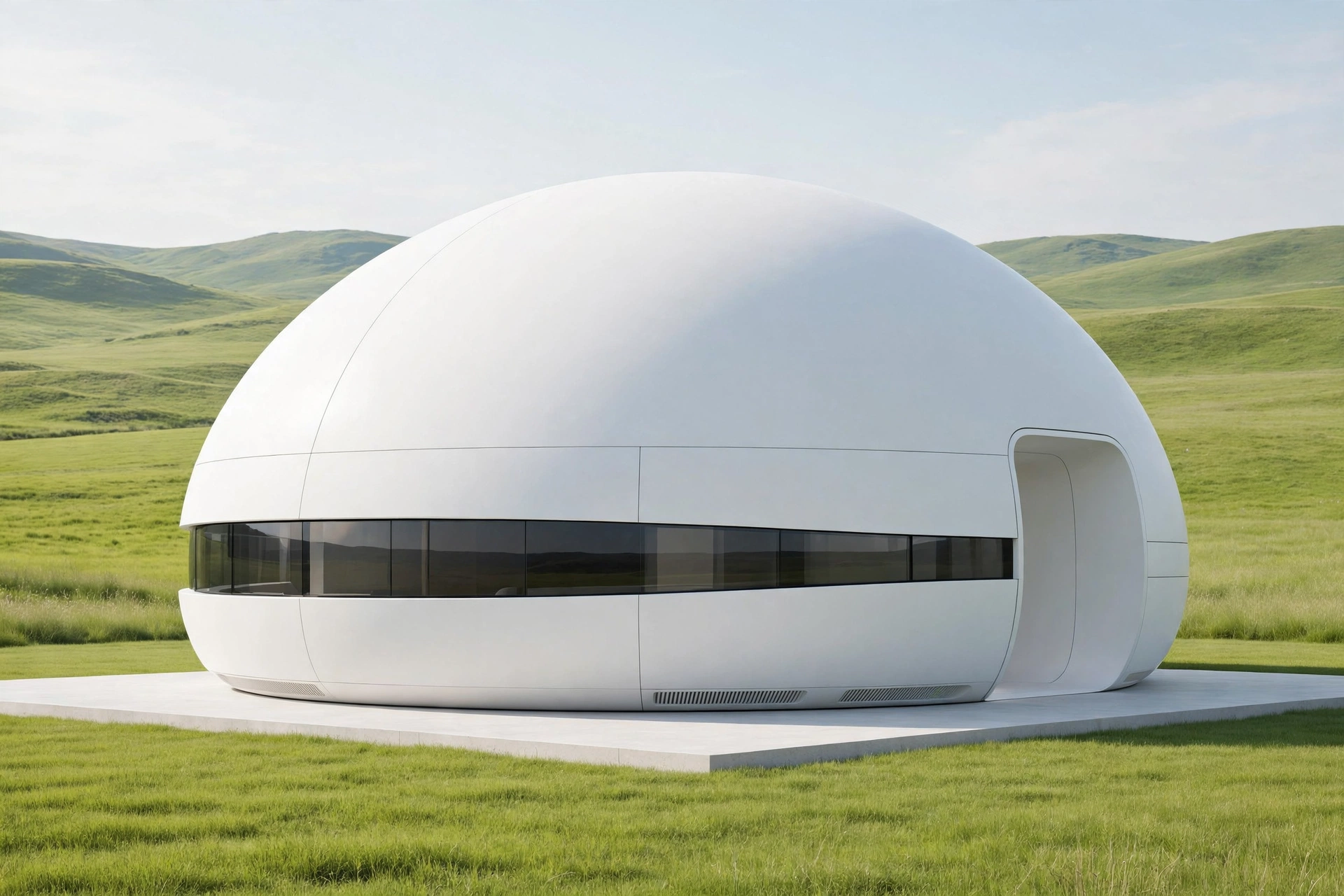
Kore Structures · Dome homes
Keeping Our Roots Enriched, from the ground up.
Kore Structures are dome homes built from upcycled plastic, rubber, and fiber, formed with the airform method: inflate a form, spray the shell, cure it, and remove the form to reveal the dome. The method is documented step by step on this page. It is concept stage, and no structures have been built.
Concept stage · Method documented · No structures built yet
What Kore Structures are · Concept
The idea is simple: take upcycled plastic, rubber, and fiber, the same kinds of materials KoreBin is designed to process into ore, and form them into dome shells using an airform method that needs no scaffolding and no heavy framing.
Concept stage · Method documented · Nothing built
A dome is one of the strongest shapes in construction: loads spread evenly across the curve, so the structure works with the material instead of against it.
The design calls for a sprayed shell made from a mix of upcycled plastic, rubber, and fiber, layered up until the walls are thick and strong.
A flexible upcycled plastic sheet is inflated into a dome form with an air pump. The shell is built up over the form, then the form is deflated and removed.
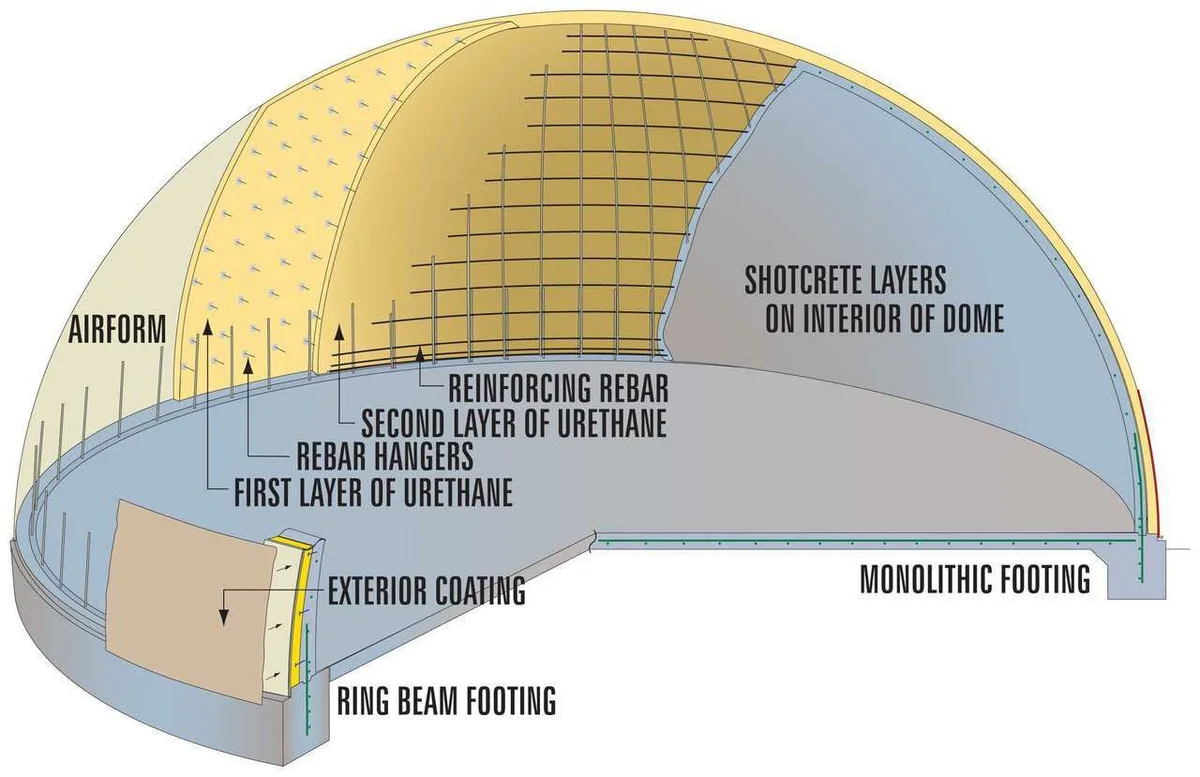
A visual summary of the airform approach, from foundation to finished shell. Concept visualization, pre-prototype.
The airform method · Documented
This is the documented construction method for Kore Structures. It is a paper method today: no structures have been built with it, and no materials have been tested at scale.
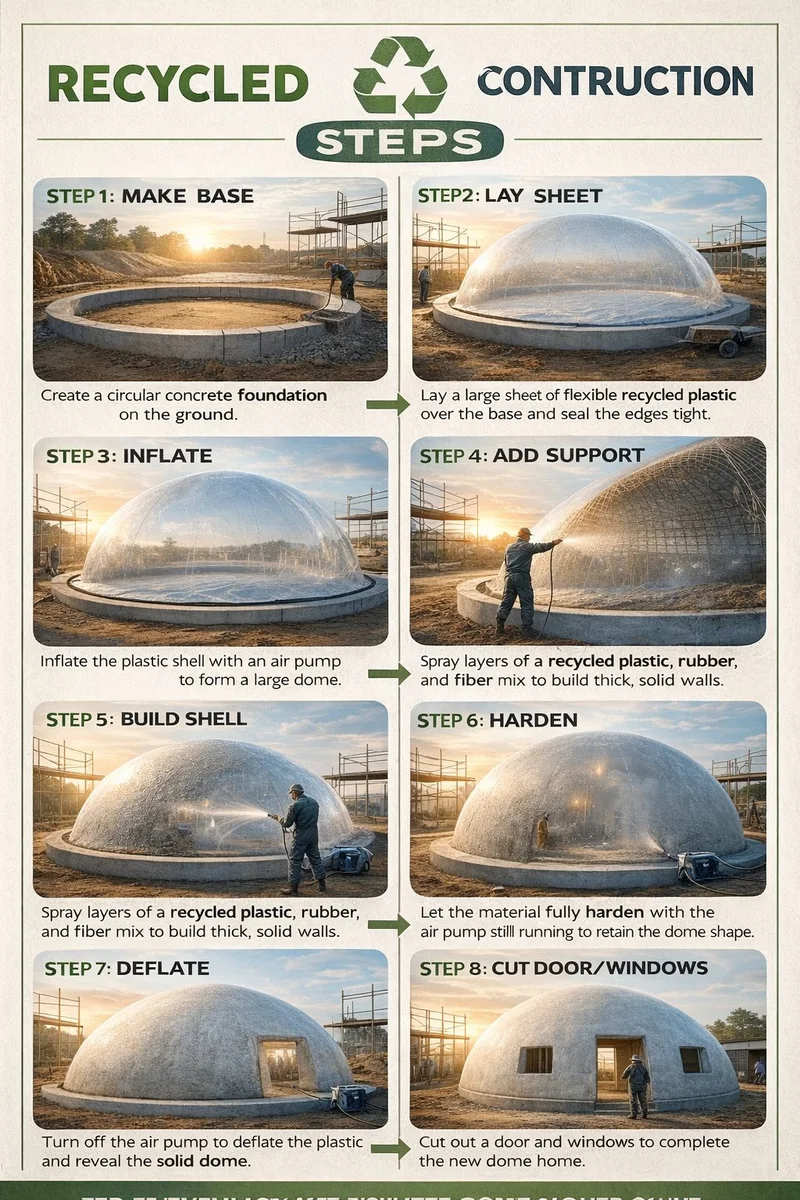
The full infographic of the documented method. Concept visualization, pre-prototype.
Pour a circular concrete foundation. This is the footprint the dome will stand on.
Lay a flexible upcycled plastic sheet over the base, with the edges sealed.
An air pump inflates the sheet into a dome form, holding the shape while the shell is built.
Spray a mix of upcycled plastic, rubber, and fiber over the form to start building the shell.
Sprayed layers build up into thick, strong walls that follow the dome curve.
Cure the shell with the pump running, so the form keeps its shape while the walls set.
Deflate and remove the form to reveal the solid dome standing on its own.
Cut the door and windows into the finished shell.
Inflation in view · Concept
The core trick of the method is using air pressure instead of scaffolding: the inflated form is the mold, and it leaves once the shell can stand alone.
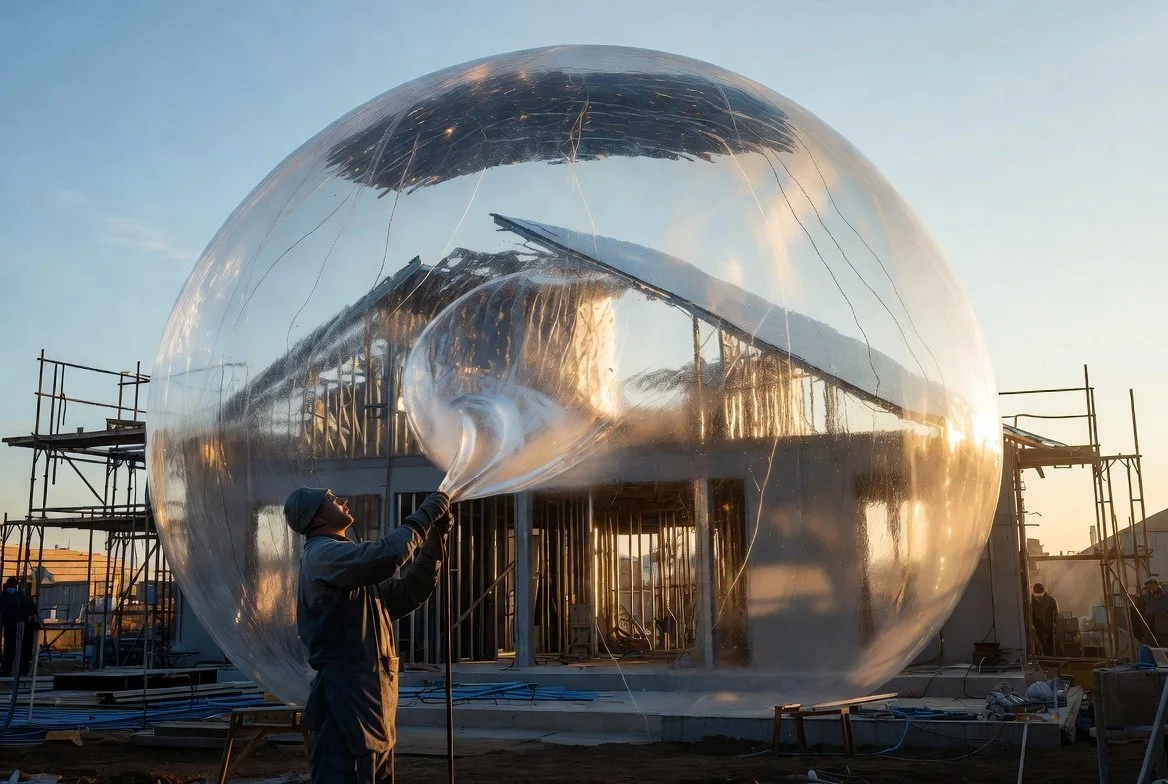
The air pump raises the form into its dome shape. Concept visualization, pre-prototype.

Forms ready to receive the sprayed upcycled shell. Concept visualization, pre-prototype.
Closed economy · Concept
Kore Structures tie directly into the Kore closed economy: the materials designed to become dome shells are the same kinds of recovered materials the loop is built around.
Where applicable, structures use KoreBoard panels as part of the build, closing the loop between recovered material and finished construction. Concept.
The upcycled plastic, rubber, and fiber for the shell are the same kinds of materials the KoreBin loop is designed to output as labeled upcycled ore. Concept.
The loop works like this: waste materials enter the system, they are reformed into usable feedstock, and that feedstock becomes the walls people live inside. Nothing here is built yet; the whole loop is concept stage.
Interactive 3D · Concept
Orbit the concept home, peel back the K-Board shell, and switch on the sensor network, purification flows, and exploded view. Concept visualization, pre-prototype.
Honest stage
Every claim on this page is marked for what it is. The construction method is documented from the construction approach. That is where it stands.
The public build log records what is planned, what is done, and what failed, with nothing presented as further along than it is. If a structure moves from paper to prototype, that is where it will appear first.
Next steps
Kore Structures are a documented method waiting for a first build: partners to supply materials, builders to raise the first shell, and pilot hosts to give it ground to stand on.